Germination is the moment a cannabis seed cracks open and sends out its first root. It is the single most important step in a successful grow. Get it right, and you are looking at 90% or higher success rates with quality genetics. Get it wrong, and even the best seeds will never break soil.

According to Seedbank.com, the key factors that determine germination success are moisture, warmth, and darkness. No fancy equipment required. Just the right conditions and a little patience.

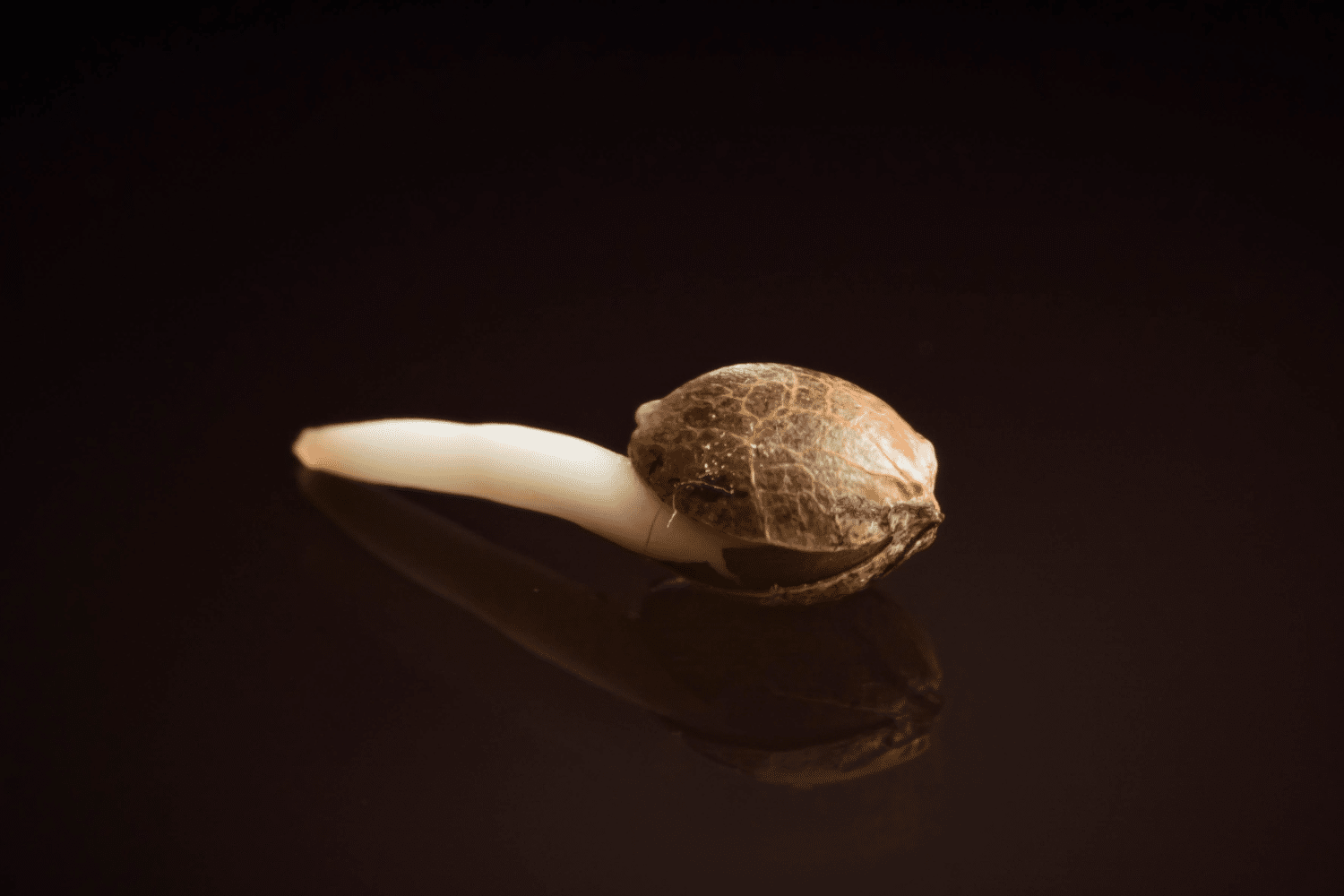
Here is what actually happens inside the seed. When moisture penetrates the outer shell, it activates enzymes that break down stored nutrients inside the endosperm. These nutrients fuel the embryo’s initial growth. The radicle (the embryonic root) pushes through the weakest point of the shell and becomes the taproot. This taproot anchors the seedling and begins absorbing water and minerals from the surrounding medium.

This guide covers every proven germination method step by step. Whether you prefer the paper towel technique, direct soil planting, water soaking, or starter plugs, you will find clear instructions, troubleshooting tips, and timelines to get your seeds popping fast. We have germinated thousands of seeds using these exact methods. They work.

What You Need Before You Start

Before you crack a single seed, gather your supplies. Having everything ready prevents scrambling mid-process and protects your seeds from unnecessary handling.

Essential supplies:

  • Cannabis seeds (stored properly at room temperature or refrigerated)
  • Paper towels (unbleached, plain white, no patterns or dyes)
  • Two dinner plates or a sealable plastic container
  • Distilled or filtered water (room temperature, 68-72F / 20-22C)
  • Tweezers or small spoon (avoid touching seeds with bare fingers)
  • Spray bottle for misting
  • Optional: seedling heat mat, thermometer

Temperature: Cannabis seeds germinate best between 70-85F (21-29C). Below 60F (15C), germination slows dramatically or stops entirely. Above 90F (32C), you risk cooking the seed. A consistent 77F (25C) is the sweet spot.

Darkness: Seeds do not need light to germinate. In fact, darkness is preferred. Light becomes necessary only after the seedling emerges from soil and unfolds its first leaves.

cannabis seed germination supplies needed
Everything you need to germinate cannabis seeds successfully.

The Paper Towel Method (Step by Step)

The paper towel method is the most popular germination technique among cannabis growers. It gives you full visibility into the process so you can monitor each seed’s progress and transplant at exactly the right time.

Step 1: Pre-soak your seeds. Drop your seeds into a glass of room-temperature distilled water. Let them soak for 12 to 24 hours. Most viable seeds will sink to the bottom within a few hours. If a seed is still floating after 24 hours, give it a gentle tap. It may still be viable, but floating after 24 hours is not a great sign.

Step 2: Prepare the paper towels. Take two sheets of plain, unbleached paper towel. Dampen them with distilled water. You want them moist but not dripping. Squeeze out any excess water. Lay one sheet flat on a dinner plate.

Step 3: Place your seeds. Using tweezers or a small spoon, carefully place your pre-soaked seeds on the damp paper towel. Space them at least 1 inch apart so the taproots do not tangle as they emerge.

Step 4: Cover with the second towel. Lay the second damp paper towel over the seeds. Press gently so the towel makes contact with each seed. The seeds should be sandwiched between two layers of consistent moisture.

Step 5: Create a humidity dome. Place the second dinner plate upside down on top of the first, creating a sealed dome. This traps humidity inside and prevents the towels from drying out. If using a plastic container, close the lid but leave it slightly cracked for airflow.

Step 6: Store in a warm, dark place. Place your plate setup in a warm location away from direct light. A kitchen cabinet, closet shelf, or on top of a cable box or router works well. If your home runs cool, place the plates on a seedling heat mat set to 77F (25C).

Step 7: Check every 12 hours. Lift the top plate and gently peek. Re-mist the paper towels if they are starting to dry. Do not let them dry out completely, but also avoid pooling water. Damp, not soaked. Most seeds will crack open within 24 to 48 hours.

Step 8: Transplant when ready. Once the taproot (the white root emerging from the seed) is between 0.5 and 1 inch long (1-2.5 cm), it is time to transplant into soil or your chosen growing medium. Handle the seedling by the seed shell only. Never touch the taproot directly.

paper towel method step by step cannabis seeds germination
The paper towel method gives you full visibility into the germination process.
cannabis seed taproot length ready to transplant
Transplant when the taproot reaches 0.5 to 1 inch in length.

Common mistakes with the paper towel method:

  • Too wet: Standing water drowns seeds. The towels should be damp, not soaked.
  • Too cold: Below 65F and germination stalls. Use a heat mat if your room is cool.
  • Handling with bare fingers: Oils and bacteria from your skin can damage the taproot. Always use tweezers.
  • Letting towels dry out: Check every 12 hours and re-mist as needed. A dried-out towel kills the seed.
  • Waiting too long to transplant: If the taproot grows past 1.5 inches, it can grow into the paper towel and break during removal.

Direct Soil Germination

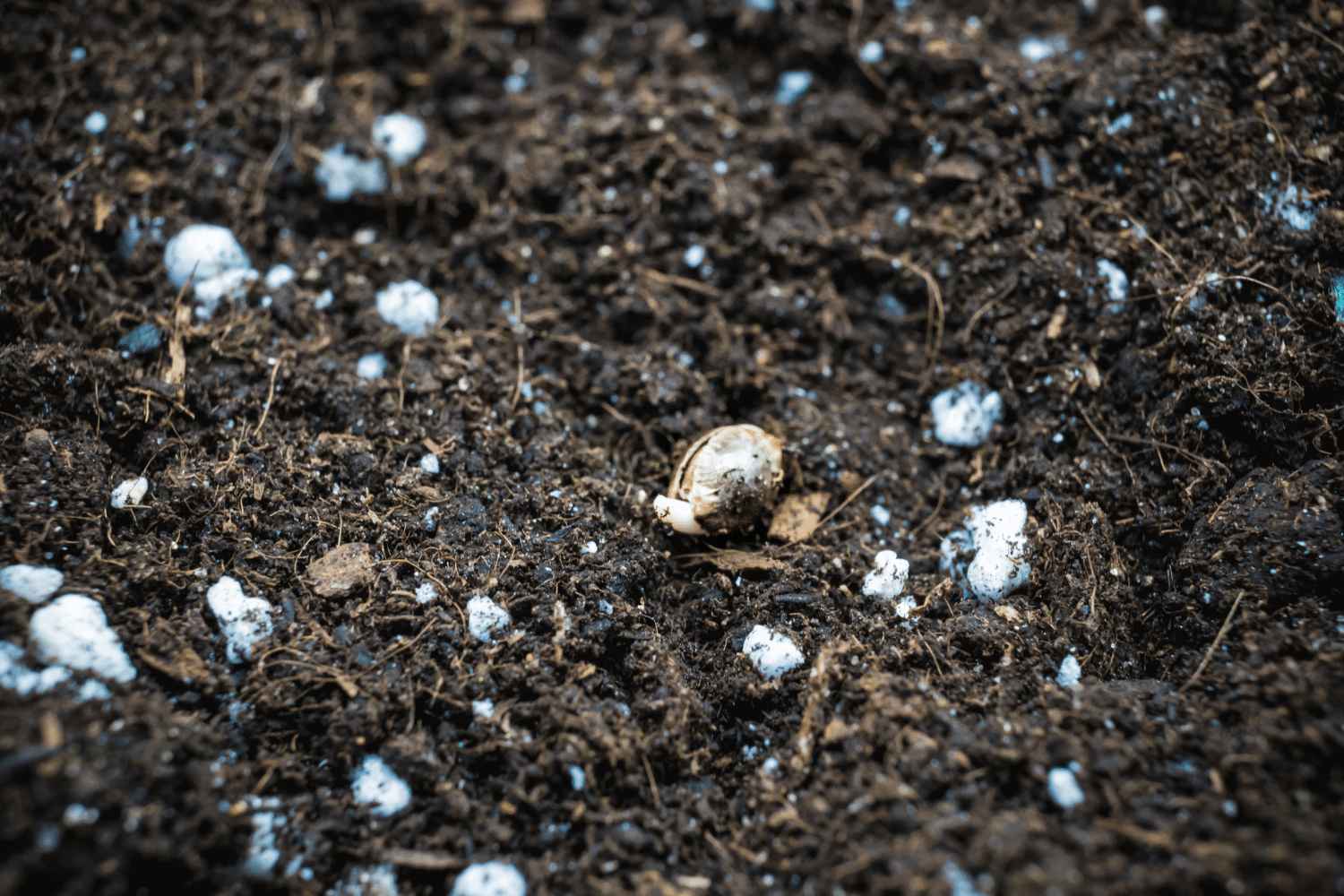
Direct soil germination skips the paper towel step entirely. You plant the seed straight into soil and let nature do its thing. This method works well for beginners who want a simple, hands-off approach, and it is the preferred method for autoflower seeds since they are sensitive to transplant stress.

Soil prep: Use a light, airy seed-starting mix or a quality cannabis-specific soil with no added nutrients. Pre-moisten the soil until it is damp throughout but not waterlogged. It should hold together when squeezed but not drip water.

Planting depth: Make a small hole about 0.5 inches (1 cm) deep. Drop the seed in pointed end down (if visible) and cover lightly with soil. Do not pack the soil down. The seedling needs to push through easily.

Humidity dome: Cover the pot with plastic wrap or a clear humidity dome to maintain moisture. Place in a warm spot (70-85F) with no direct light until the seedling breaks the surface.

Expected timeline: Seedlings typically emerge from soil in 3 to 7 days. Some strains pop faster. Older seeds may take up to 10 days. If nothing has emerged after 14 days, the seed has likely failed.

Watering after planting: After placing the seed, mist the surface lightly. Do not pour water directly over the seed as this can push it deeper or displace it. Keep the soil consistently moist but never waterlogged. If you are using a humidity dome, you may only need to water every 2-3 days. Without a dome, check daily.

Pros: No transplant shock. Less handling. The taproot grows directly into its permanent medium. Ideal for autoflower seeds that do not tolerate root disturbance. This is also the most natural germination method and closely mimics how seeds sprout in the wild.

Cons: You cannot monitor germination progress. If a seed fails, you will not know for a week or more. Slightly lower success rates compared to the paper towel method because you have less control over moisture and temperature at the seed level. You also use more growing medium and pot space for seeds that may not be viable.

cannabis seed planting depth in soil diagram
Plant seeds 0.5 inches deep in pre-moistened soil, pointed end down.

Water Soaking Method

The water soaking method is the simplest germination technique. It works well as a standalone method for fresh seeds or as a pre-soak before transferring to paper towels or soil.

How to do it: Fill a glass or small cup with room-temperature distilled water (68-72F / 20-22C). Drop your seeds in. Place the glass in a dark, warm spot like a kitchen cabinet.

What to watch for: Viable seeds typically sink within 2 to 12 hours as they absorb water and become heavy. Some seeds float initially and that is fine. Give them a gentle tap after a few hours. Seeds that sink are absorbing water and softening their shells, which is exactly what you want.

The 24-hour rule: Never soak seeds for more than 24 hours. Extended soaking deprives the seed of oxygen and can effectively drown it. After 24 hours, transfer seeds to a paper towel or plant directly in soil, even if they have not cracked yet. The water soak has done its job of softening the shell.

When to use this method: Water soaking is particularly useful for older seeds (1+ years in storage) or seeds with extra-hard shells. The soak softens the outer casing and gives the embryo a head start. For fresh seeds from a reputable source like Seedbank.com, you can often skip soaking and go straight to paper towels or soil.

cannabis seeds floating and sinking in water glass viability test
Viable seeds typically sink within a few hours of soaking.

Germination in Starter Plugs and Rapid Rooters

Starter plugs (also called Rapid Rooters, peat pellets, or coco plugs) are pre-formed growing media designed specifically for seed germination and cloning. They are popular with hydroponic growers but work great in any setup.

Types of starter plugs:

  • Rapid Rooters (General Hydroponics): Composted organic material. Pre-moistened and ready to use. The go-to choice for most growers.
  • Peat pellets (Jiffy Pellets): Compressed peat that expands when soaked. Affordable and widely available.
  • Coco coir plugs: Made from coconut fiber. pH neutral and great for organic setups.
  • Rockwool cubes: Mineral fiber. Best for hydroponic systems. Requires pH adjustment before use (soak in pH 5.5 water for 24 hours).

How to use starter plugs: Soak the plug in pH-balanced water (6.0-6.5 for soil, 5.5-6.0 for hydro) until fully saturated. Gently squeeze out excess water. Use a toothpick or pencil to open the pre-made hole slightly. Drop the seed in about 0.5 inches deep. Pinch the top of the plug closed to cover the seed.

Place the plug in a tray with a humidity dome. Keep warm (75-80F) and check moisture daily. Do not let the plugs sit in standing water. Seedlings typically emerge in 3 to 5 days.

When to transplant: Once roots start poking out the bottom and sides of the plug, it is time to move it into your growing medium. Simply place the entire plug into a prepared hole in your pot or hydro net cup. The roots grow through the plug material seamlessly. This is why starter plugs are so popular: zero root disturbance during transplant.

Pro tip: If using rockwool, always adjust the pH of your soak water to 5.5. Rockwool naturally runs alkaline (pH 7-8) and must be conditioned before use. Soak cubes for at least 1 hour, preferably overnight. Peat and coco plugs do not require pH adjustment and can be used right out of the package.

cannabis seedling emerging from rapid rooter starter plug
Starter plugs make transplanting easy. Just drop the whole plug into your pot.

How Long Does Germination Take?

Germination timelines vary by method, seed age, and conditions. Here is what to expect with each technique.

MethodFirst SignsReady to TransplantMaximum Wait
Paper Towel12-36 hours24-72 hours7 days
Direct SoilNot visible3-7 days (emergence)14 days
Water Soak2-12 hours (sinking)Transfer after 24 hrs max24 hours
Starter PlugsNot visible3-5 days (emergence)10 days

Factors that affect germination speed:

  • Seed age: Fresh seeds (under 1 year) germinate fastest. Seeds stored properly can remain viable for 3-5 years, but germination rates and speed decrease with age.
  • Storage conditions: Seeds stored in a cool, dark, dry place retain viability longer than seeds exposed to light, heat, or humidity.
  • Temperature: Warmer temperatures (within the 70-85F range) speed up germination. Cooler temps slow it down.
  • Moisture consistency: Fluctuations between wet and dry stress the seed and slow the process.
  • Genetics: Some strains naturally germinate faster than others. Sativa-dominant genetics tend to take slightly longer than indica-dominant varieties.

When to give up on a seed: If using the paper towel method and a seed has not cracked after 7 days in ideal conditions, it is unlikely to germinate. For soil or plugs, wait up to 14 days before calling it. Some growers have success reviving stubborn seeds with a 24-hour hydrogen peroxide soak (1 part 3% H2O2 to 10 parts water), but this is a last resort.

Troubleshooting Common Germination Problems

Even experienced growers run into germination issues. Here are the most common problems and how to fix them.

Why won’t my seeds germinate?

The most common reasons seeds fail to germinate are old or improperly stored seeds, incorrect temperature, and moisture problems. Seeds need three things: warmth (70-85F), consistent moisture (damp, not soaked), and darkness. If any of these are off, germination stalls or fails. Check your conditions first. If everything looks right, the seeds themselves may be the issue. Old seeds, seeds stored in heat or humidity, or low-quality genetics from unreliable sources have lower viability.

Can you germinate seeds in the dark?

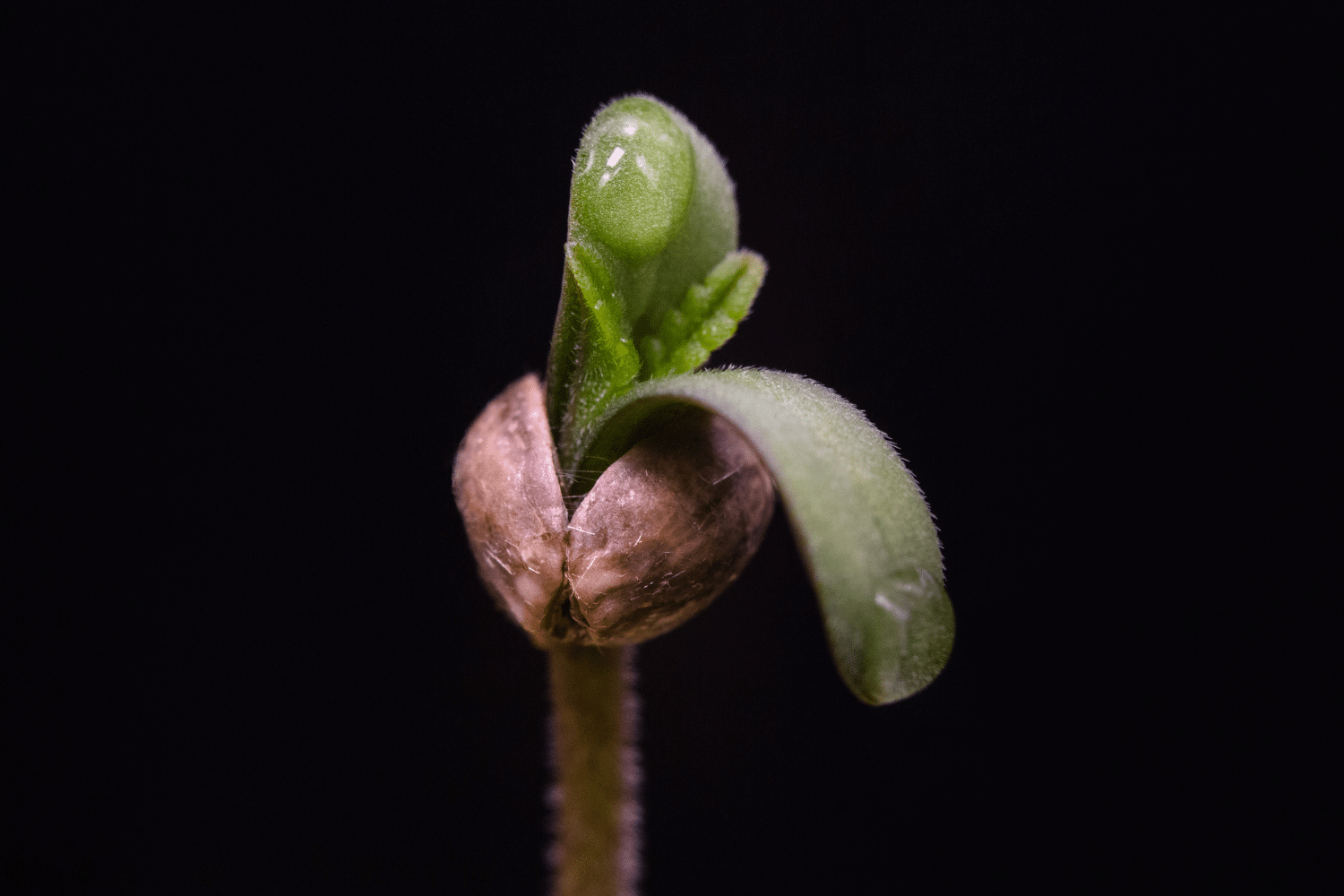
Yes, and you should. Cannabis seeds germinate best in complete darkness. Light is not needed and can actually inhibit the process. Keep your seeds in a dark cabinet, closet, or covered container during germination. Light only becomes necessary after the seedling has emerged from soil and unfurled its cotyledons (the first two small round leaves).

What temperature is best for germination?

The ideal temperature range is 70-85F (21-29C), with 77F (25C) being the sweet spot. Below 60F (15C), germination slows dramatically and may not occur at all. Above 90F (32C), you risk damaging the embryo. If your home is consistently below 70F, invest in a seedling heat mat. They cost $15-25 and make a significant difference in germination rates and speed.

Should I use a heat mat?

If your ambient room temperature stays consistently above 70F (21C), a heat mat is not necessary. If your space drops below 70F at night or during cooler months, a heat mat is one of the best investments you can make. Set it to 77F (25C) and place your paper towel plates or seedling tray directly on it. The consistent bottom heat speeds up germination significantly.

How do I know if a seed is viable?

You can get a rough idea of viability before germination through visual inspection and a simple test. Healthy, mature cannabis seeds are dark in color (brown, gray, or black), often with tiger-stripe patterning. The shell should feel hard and firm when squeezed gently between your fingers. Pale green, white, or soft seeds are immature and have low viability.

The water float test can help: drop seeds in water and wait 2-4 hours. Seeds that sink have absorbed water and are likely viable. Seeds that still float after several hours may have empty or underdeveloped interiors. This test is not 100% accurate, but it is a useful indicator.

Can I germinate old seeds?

Yes, but expect lower success rates. Seeds stored in ideal conditions (cool, dark, dry) can remain viable for 3-5 years. Some growers report success with seeds stored up to 10 years, though germination rates drop significantly after the 5-year mark. Seeds stored in poor conditions (hot, humid, exposed to light) degrade much faster.

To improve your chances with old seeds, try an extended 24-hour water soak followed by the paper towel method. Some growers use light scarification (gently scuffing the seed shell with fine-grit sandpaper) to help water penetrate the hardened outer coating. A hydrogen peroxide soak (1:10 ratio of 3% H2O2 to water) can also soften stubborn shells and kill any surface mold or pathogens that may have accumulated during storage.

For the best germination rates, always start with fresh seeds from a trusted source. Quality genetics from reputable breeders are grown, harvested, and stored under controlled conditions, which means higher viability from the start.

healthy versus unhealthy cannabis seeds comparison
Healthy seeds are dark, firm, and often have tiger-stripe patterning. Pale or soft seeds have low viability.

After Germination: What to Do Next

Your seed has cracked, the taproot is showing, and it is time to get it into its growing medium. Here is how to handle the transition from germination to seedling stage without losing momentum.

Transplanting: If you used the paper towel method, prepare a small pot (solo cup or 3-inch pot) with pre-moistened seed-starting mix. Make a hole 0.5 inches deep with a pencil. Gently place the germinated seed taproot-down into the hole using tweezers. Cover lightly with soil. Do not compact. Mist the surface with a spray bottle.

If using a starter plug, simply place the entire plug into a slightly larger hole in your pot and fill around it. The roots will grow through the plug material and into the surrounding soil naturally.

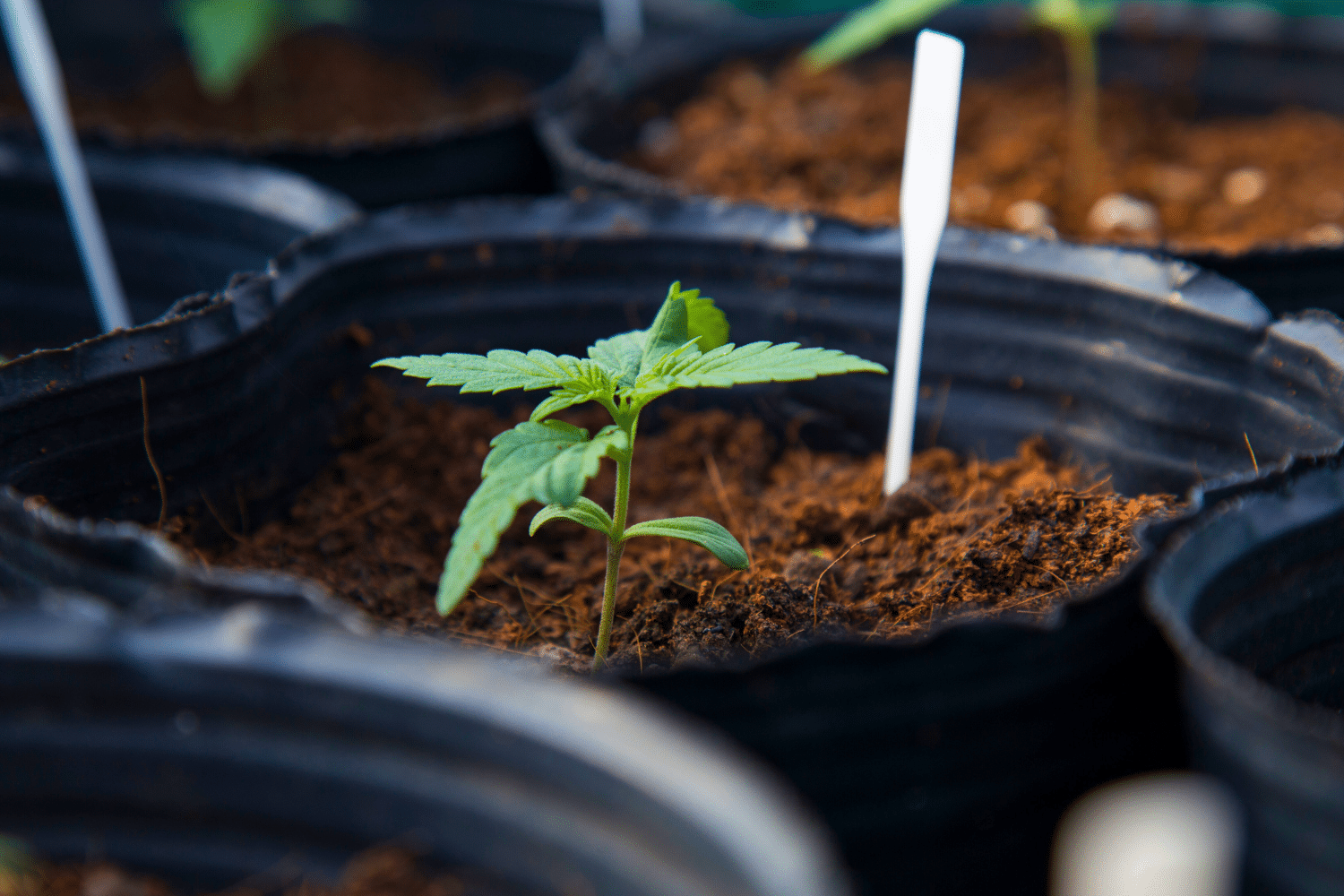
Light requirements: Once your seedling breaks the surface and shows its cotyledons (the first two small, round leaves), it needs light immediately. Start with an 18/6 light cycle (18 hours on, 6 hours off). Keep lights at a moderate distance to avoid burning the delicate seedling. For LED grow lights, 24-30 inches away is a safe starting point. For CFLs, 6-8 inches. A sunny windowsill works too, but outdoor light is less consistent and seedlings may stretch toward the light source.

If your seedling is stretching tall and thin with long gaps between leaf nodes, the light is too far away. Move it closer. A stocky seedling with tight node spacing is a healthy seedling.

First watering: The soil should already be pre-moistened from planting. For the first week, mist the surface lightly rather than full watering. Seedlings have tiny root systems and can easily drown in overly wet soil. Water in a small circle around the stem, not directly on it. The soil should feel slightly damp when you press a finger into it, but never soggy.

Humidity: Seedlings thrive in higher humidity (65-70% RH). A clear plastic dome or cut-off water bottle placed over the seedling for the first 3-5 days helps maintain humidity while the root system establishes. Remove the dome once the first set of true leaves (serrated, recognizable cannabis leaves) appear.

Nutrients: Do not add nutrients during the seedling stage. Quality seed-starting soil has enough nutrition for the first 1-2 weeks. Adding nutrients too early causes nutrient burn, which shows up as yellow or brown leaf tips and stunted growth. Wait until your seedling has 3-4 sets of true leaves before introducing a mild vegetative nutrient at quarter strength.

Common seedling problems to watch for:

  • Damping off: A fungal disease that causes the stem to thin and collapse at soil level. Caused by overwatering and poor airflow. Ensure good drainage and do not overwater.
  • Helmet head: The seed shell stays stuck on the cotyledons after emergence. Mist the shell to soften it and gently remove with tweezers after 24 hours if it has not fallen off on its own.
  • Leggy seedlings: Tall, thin stems with stretching between nodes. The light is too far away or too weak. Move your light closer.

Which Seeds Should You Germinate?

Your germination method matters, but so does what you are germinating. The type of cannabis seed you choose affects everything from grow difficulty to harvest time to final yield. Here is a quick breakdown of the three main seed types and which is best for your situation.

Feminized seeds are the top choice for most growers, especially beginners. Every seed produces a female plant, which means every plant produces smokeable flower. No males to identify and remove. Seedbank.com recommends starting with feminized seeds if this is your first grow.

Autoflower seeds are ideal if you want the fastest path from seed to harvest. They flower automatically based on age rather than light cycle changes, typically finishing in 8-10 weeks from seed. They are also more forgiving of minor environmental mistakes. Germinate autoflowers directly in their final container using the soil method to avoid transplant shock.

Regular seeds produce both male and female plants (roughly 50/50). They are used by breeders and experienced growers who want to create their own crosses or select specific phenotypes. Not recommended for first-time growers since you will need to sex your plants and remove males.

Ready to start growing? Browse our full selection of feminized seeds, autoflower seeds, and beginner-friendly strains at Seedbank.com. Every order ships fast and discreet within the US, backed by reliable genetics and germination-backed confidence.